Your HVAC system has to move heat, not just air.
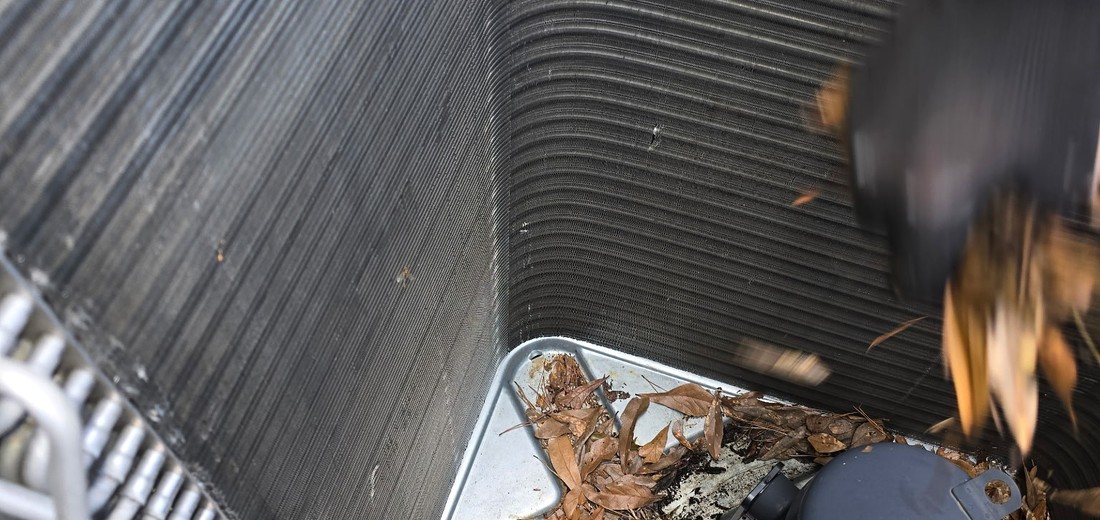
The evaporator coil indoors absorbs heat from the air moving through the system. The condenser coil outdoors releases that heat. When dirt and debris coat those surfaces, the system has a harder time doing that job.
Louisiana conditions make buildup easy to ignore.
Outdoor equipment is exposed to grass, leaves, dust and other debris. Indoors, filters, airflow problems and normal household dust can contribute to buildup over time. A system may still run while its ability to move heat and air gradually declines.
A quick surface rinse is not the same as a thorough cleaning.
BLU emphasizes real indoor and outdoor coil cleaning as part of its maintenance approach. The goal is to remove buildup where it affects heat transfer and airflow rather than simply making the visible surface look cleaner.
Coil condition belongs in the bigger diagnostic picture.
Dirty coils are only one possible cause of poor cooling. Electrical problems, low airflow, drainage issues, refrigerant performance and system sizing can also affect comfort. That is why a full system evaluation is more useful than guessing from one symptom.
QUICK ANSWERS
Common questions
Can dirty coils make an AC run longer?
They can contribute to reduced heat transfer, which may make the system work harder to maintain comfort.
Should homeowners clean indoor coils themselves?
Indoor coil access and cleaning can involve electrical components and condensate systems. Professional evaluation is the safer choice when the coil needs more than routine filter care.